
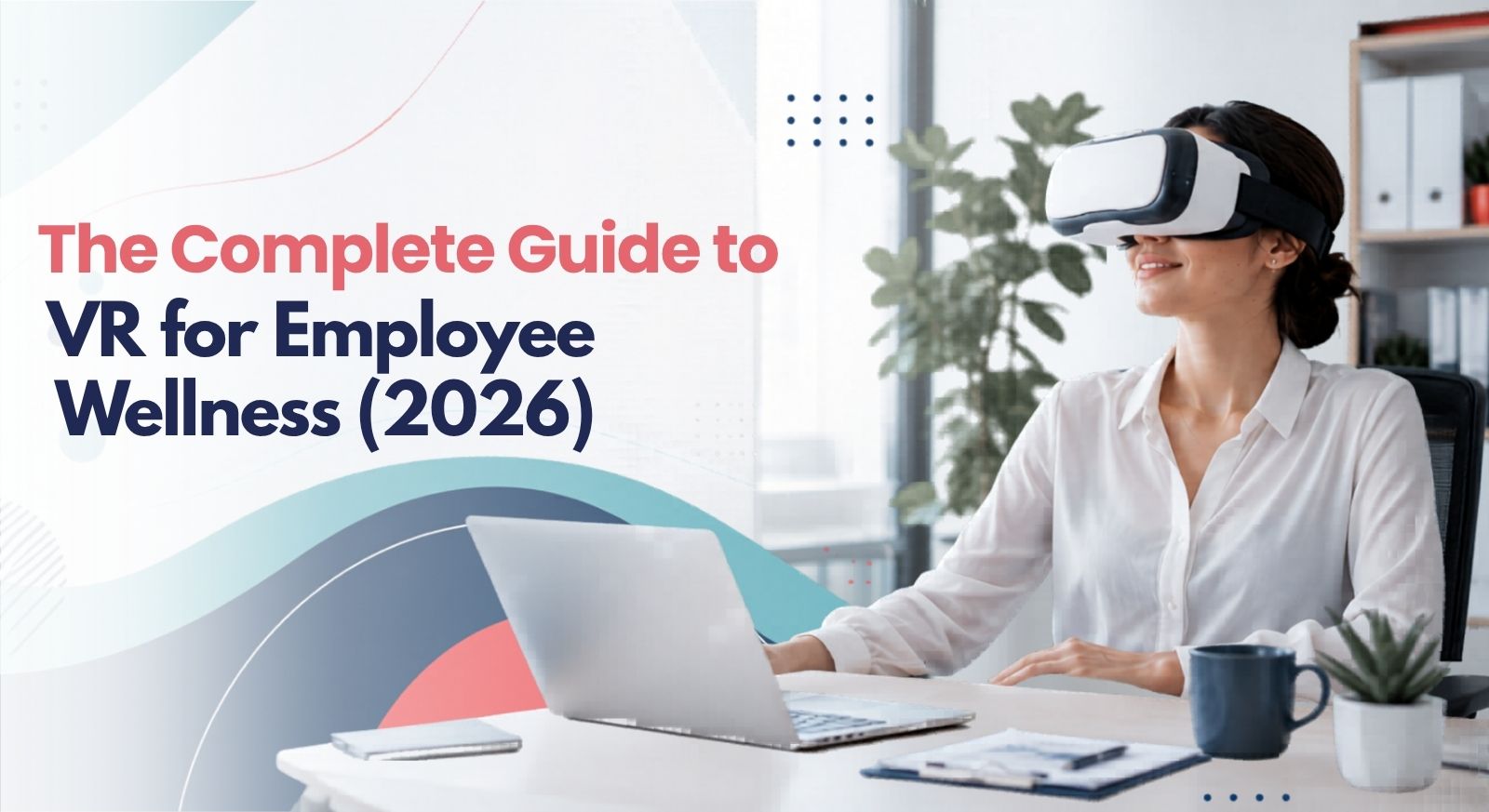

The Complete Guide to VR for Employee Wellness (2026)
Burnout is no longer a buzzword. It is the one thing causing Mondays to be a drag, making highly qualified individuals subtly change their resumes, and having HR constantly seek ways to counteract it. Fitness club memberships cannot solve it all.
So when companies start talking about strapping on a headset to decompress, you would think it sounds gimmicky. But the research inside real workplaces says otherwise.
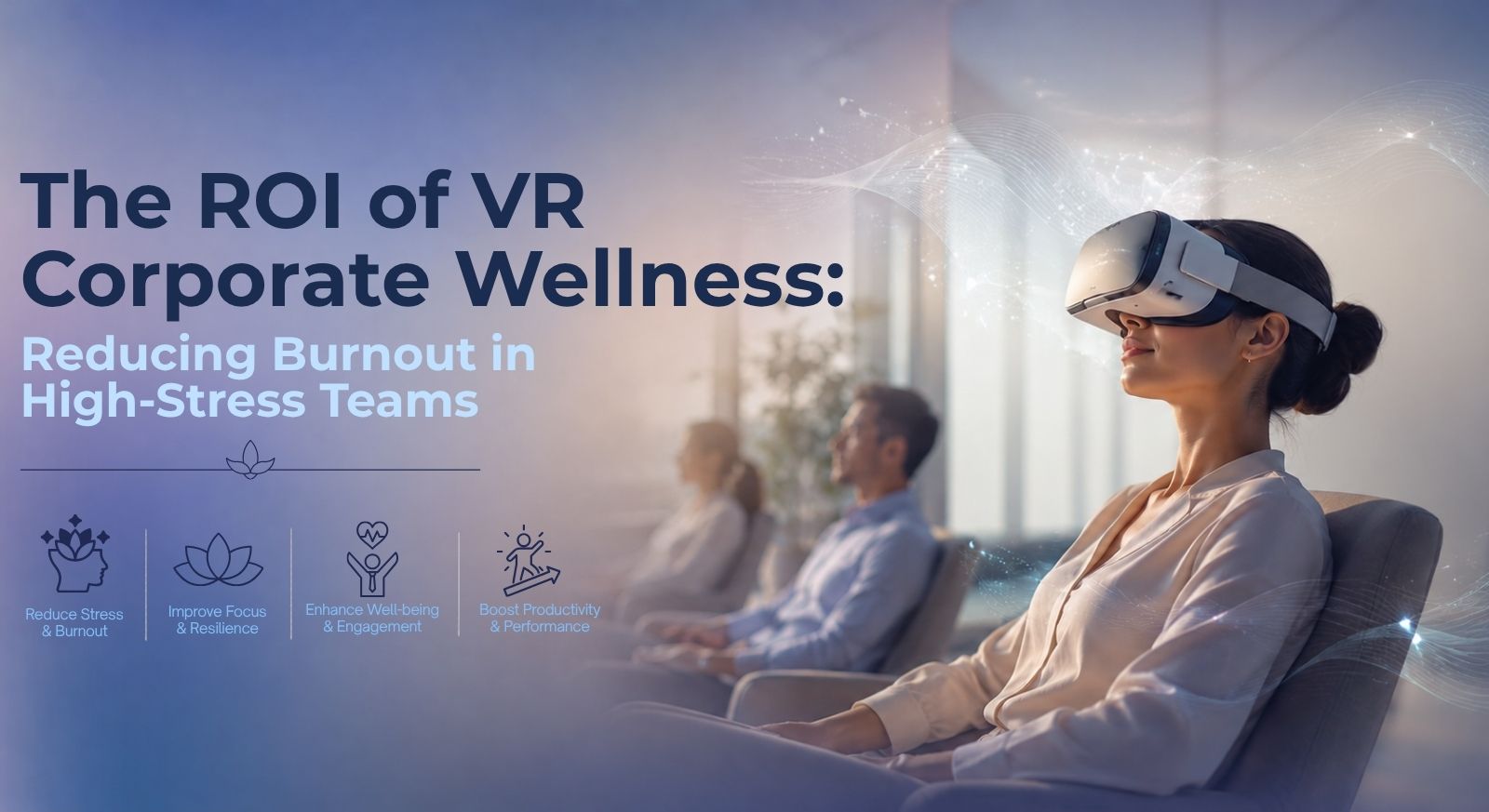
VR for employee wellness has moved well past the pilot phase. In 2026, it is one of the most evidence-backed tools companies are deploying to protect their workforce's mental and physical health, and it works in ways traditional programmes simply cannot replicate.
Why the Old Wellness Programs Are Broken
Most workplace wellness programs mean well but have little impact. You might notice a poll, a webinar, or a meditation app that just a few people continue to use.
The problem is not the content; it is the experience. People cannot relax just because they are told to. The brain needs a real change in environment to switch off.
This is exactly where virtual reality workplace wellness holds a serious edge over everything else. With VR technology, you can easily get your brain to see a serene scenario in just a little time. This will be conveyed through listening to calming music, the relaxing voice of a speaker, and calm views in the virtual world.
What the Research Actually Shows
A review of 17 studies with over 1,270 people found VR relaxation is effective for workplace wellbeing, improving stress even after short sessions. Recent studies also show VR breaks, and mindfulness can reduce stress and boost mood more than videos or audio alone.
The numbers around VR mental health at work are difficult to ignore:
These are not arbitrary figures. They show a recurring pattern in separate studies: passive content merely does not alter the body's reaction in the same way as immersion does.
What VR for Employee Wellness Actually Looks Like in Practice
There is a tendency to imagine this as some futuristic lounge where employees sit in pods for hours. The reality is far more practical.
Short-term VR training (5-15 minutes): The employees go through short VR training sessions where breathing exercises or nature guides are used. A short session of five minutes would be sufficient to relieve stress and focus on work.
Mindfulness and cognitive behavior therapy: Certain VR training programs provide mindfulness training via cognitive behavior therapy, whereby employees can train themselves via VR training.
Empathy and conflict resolution: Role playing in VR provides an improved sense of empathy and communication skills without creating conflicts in the workplace.
VR training and biofeedback: Genuine data are provided by advanced headsets, combining VR training and biofeedback, which measure the employee stress and their heart rate, rather than relying on survey results.
Physical rehabilitation and movement: VR training programs are comparable or even superior to conventional training exercises regarding balance and flexibility.
Corporate VR Wellness Programmes: Who Is Doing It and What They Are Learning
Corporate VR wellness programmes are no longer experimental. By 2026, large enterprises will be embedding them structurally rather than as one-off pilots.
Amazon rolled out VR wellness training across multiple sites. Every single participant said they would use it again. That is an engagement figure most wellness teams would trade almost anything for.
In healthcare, institutions now use VR regularly for staff rehabilitation and mental health support alongside clinical work. The crossover into corporate settings has happened naturally. If VR helps surgeons handle stress, it can also help employees dealing with stress management.
The key point is that VR does not replace existing wellness support. It adds to it. It provides a simple, always-available solution that people are more likely to utilize because it feels interesting rather than taking the place of therapy or EAPs.
Honest Challenges Worth Knowing
No complete guide skips the limitations. Here is what HR and wellness leads actually deal with:
Cost at scale: Two headsets and licences cost considerably less than two psychologists. But equipping an entire workforce still requires a clear ROI case for leadership.
Organisational buy-in: The technology requires champions, but it also requires that the skeptics be won over early. They become the most valuable endorsements when they see the results for themselves.
Motion sensitivity: Research from Inside Science found that 40 to 70 percent of first-time users experience some form of cybersickness within 15 minutes of use. This number drops significantly with high-quality headsets and low-motion content, which is exactly the kind used in wellness applications. Good programmes account for this from the start.
Research Limitations: Most research takes a short period of time to study. But the field is quickly developing, and longer-term efficacy studies are still following the pace of the enthusiasm.
How to Actually Implement This in Your Workplace
If you are building out a programme around VR for employee wellness, here is a framework that avoids the common missteps:
Start with a defined problem. Is it burnout? Stress peaks around deadlines? Poor morale in the workplace? The use case should map to a specific pain point, not be VR for the sake of VR.
Conduct a planned 6-week experiment. Before making a significant commitment, a small cohort of 20 to 30 individuals from several departments provides you with actual data.
Measure the important things. Aggregate both objective parameters like productivity parameters (proxies) and subjective parameters like engagement scores before/after and absenteeism trends.
Make access frictionless. A headset locked in a cupboard that requires a booking system nobody uses is money wasted. Proximity and ease of access drive actual utilisation.
Instead of isolating, integrate. The best outcomes are obtained when VR products are integrated into a larger wellness ecosystem that includes mental health days, manager training, and a real psychological safety culture.
Where This Is All Heading
Employee wellbeing technology in 2026 is no longer about novelty. VR is becoming like a standing desk or ergonomic chair. It used to feel like a luxury, but now it’s seen as a smart investment in employee performance.
The firms that invest in it today will reap maximum gains in the coming years. This will involve more than just investing in VR headsets and using them without much purpose; it will involve applying them in evidence-based programs.
In a world where workers are constantly struggling with complex problems and stressful conditions that cause cognitive overload, the best solutions will not be those that simply entertain them. They will be the ones who help people genuinely recover. VR, done right, is one of them.
Closing Thought
Technology cannot solve a faulty work environment. If workers are mismanaged or discouraged from taking breaks, wearing a VR headset won’t do anything to help. However, for companies where the management actually cares about its employees, the VR technology provides an actual avenue for that concern.
One that employees actually want to use. One that can be measured. One that works with how the brain naturally recharges, not against it. Most wellness programs today appear nice on paper but deliver little in practice. VR for employee wellness is special in the sense that it actually brings about a transformation in terms of one’s physical well-being, unlike other methods of teaching people about wellness, which only affect their cognitive understanding.
Try VR With Your Team First
If your team is stressed or tired from desk work, the best way to check VR wellness is to try it.
CogniHab offers simple wellness pilots for companies across India. They match the program to your team and show results in a few weeks.
Book a free demo at cognihab.com and see what a 10-minute session can do.
Not ready yet? You can start with a free burnout and posture check.
.jpg)