
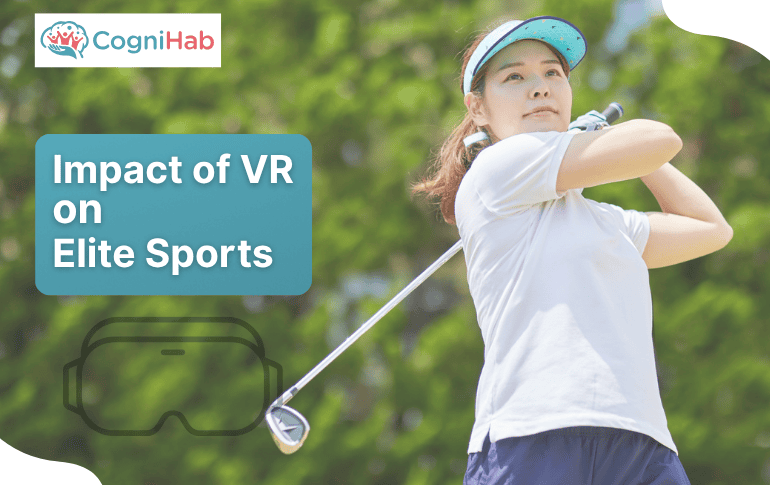

Training the Mind and Body: The Dual Impact of VR on Elite Sports
In elite sports, the line between victory and defeat is razor-thin. Margins are measured in milliseconds, split-second decisions, and mental clarity under intense pressure. That's why today's top athletes are going beyond physical training, they're embracing technologies that train both mind and body.
At the heart of this transformation? Virtual Reality (VR).
Once viewed as futuristic or purely recreational, VR is now a serious training tool. It helps athletes push boundaries, improve performance, recover faster, and sharpen mental resilience — all without stepping onto the field.
Let’s explore the dual impact of VR on physical conditioning and mental mastery in elite sports.
1. Cognitive Conditioning: Training the Brain Like a Muscle
Here’s how VR strengthens the mental game
Scenario Simulation: Athletes relive specific game situations, allowing them to practice decision-making under pressure.
Mental Rehearsal: VR-based visualization tools help athletes mentally walk through routines, reducing anxiety and improving performance.
Focus & Attention Drills: VR modules train athletes to tune out distractions and remain locked in , especially valuable in high-noise environments like stadiums.
Also read, Healthcare Worker Burnout: The Silent Crisis in Modern Health System
2. Physical Mastery: Repetition Without Physical Toll
Traditional practice methods come with wear and tear risking fatigue or injury. VR adds a layer of physical training that reduces risk and improves efficiency.
Key advantages include:
Muscle Memory Development: Movements practiced in VR translate into real-world mechanics thanks to embodied cognition.
Skill Refinement: Batting techniques, penalty shots, footwork drills , all can be practiced in VR with real-time feedback.
Low-Impact Recovery Training: Injured athletes can maintain movement patterns and stay sharp without overexertion.
3. Enhancing Reaction Time and Situational Awareness
In sports, milliseconds matter. VR meditation environments can be adjusted to challenge reaction speeds and improve real-time decision-making.
360° Situational Awareness: Athletes scan and react to fast-moving visuals from multiple directions.
Progressive Difficulty: Scenarios become more complex as the athlete improves.
Hand-Eye Coordination Drills: Especially valuable in sports like baseball, boxing, or goalkeeping.
Also read, Feeling Anxious About Starting a New Job?
4. The Psychological Edge: Mental Health and Resilience
Athletic performance isn’t just about output. It’s about emotional control, confidence, and recovery from setbacks.
Here’s how VR supports psychological well-being:
Stress Management: Calming VR environments help athletes manage pre-game jitters or post-match tension.
Guided Meditation & Breathwork: Many VR systems now include built-in mindfulness routines to promote clarity and composure.
Visualization Therapy: Simulating successful outcomes builds confidence and reduces performance anxiety.
5. Tactical Learning and Team Coordination
Elite performance doesn’t happen in isolation. Teams use VR to plan, communicate, and learn together.
Strategy Walkthroughs: Players rehearse tactical decisions with full 3D visualization.
Role-Based Simulations: Each athlete practices from their own perspective, improving cohesion.
Replay Review in 360°: Coaches can walk through plays with athletes in immersive space, offering clearer feedback than flat video.
This leads to faster learning, better coordination, and greater trust during live gameplay.
6. Recovery and Rehabilitation Support
Injuries can disrupt both body and mind. VR helps speed up recovery by:
Keeping athletes mentally engaged with their sport
Reducing boredom during rehab
Offering gamified therapy exercises that encourage consistency
Also read, How VR Helps Overworked Professionals Recharge and Refocus
The Future of Dual-Impact Training
As VR becomes more adaptive — integrating biometrics, AI, and motion tracking — it will customize routines to every athlete’s:
- Reaction time
- Stress levels
- Fatigue
- Recovery stage
It’s not just about simulating reality anymore ,it’s about enhancing it.
Final Thoughts
Virtual Reality is no longer just a cool add-on to sports, it’s fast becoming an essential training tool. For elite athletes looking to go the extra mile, VR offers the best of both worlds: mental sharpness and physical precision. Whether it’s preparing for high-stakes moments or accelerating recovery, this immersive technology is redefining the standards of elite sports. Want to see how this applies to your sport or training setup? Book a quick VR demo